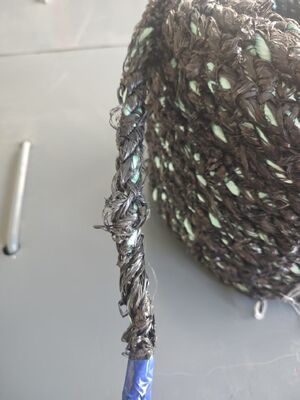
|
Product Details:
|
| Product Name: | PP Rope | Material: | 100% PP Fiber |
|---|---|---|---|
| Size: | 6mm-40mm | Length: | 200m/220m |
| Color: | White/black/red/yellow/green | Package: | Coil/Reel/Bundle/Hank/Ball |
| MOQ: | 1000Kgs | Certificate: | CCS/ABS/DNVGL/LR/NK |
| Sample: | Available | Payment: | T/T |
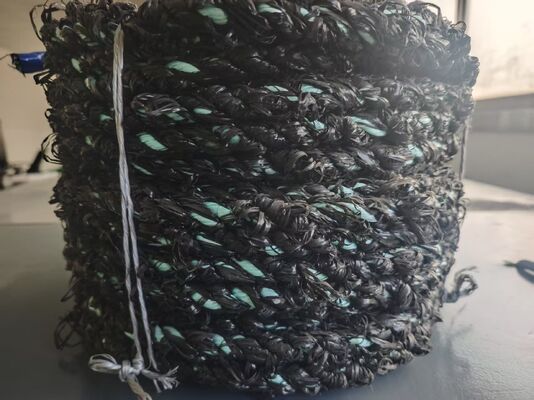
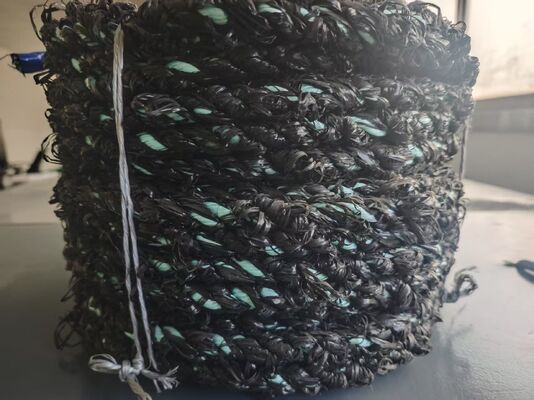
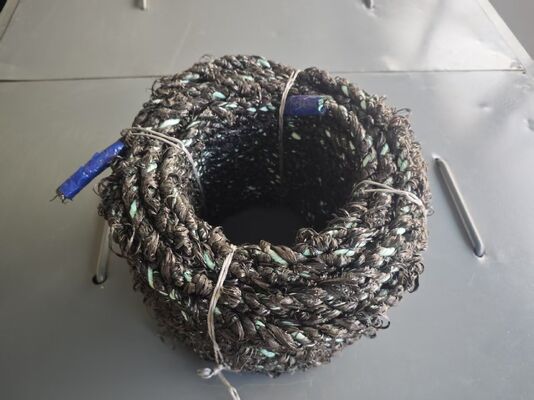
| Highlight: | 3 strand PP shellfish farming rope,UV resistant polypropylene rope 16mm,fluorescent black PP rope 220m |
||
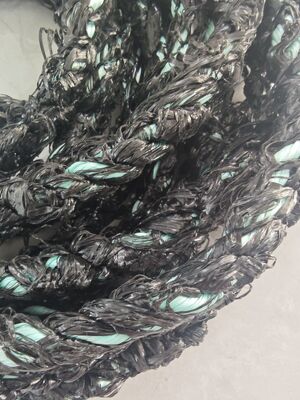
3-Strand (Twisted) Construction: This is the oldest and most traditional rope construction. For this application, it offers:
Rigidity & "Body": Holds its shape well, which is useful for setting longlines in the water column.
Easy Splicing: A basic and reliable back splice or eye splice is quick to do in the field.
Excellent Grip: The twisted profile provides a good surface for shellfish spat (larvae) to set on naturally. This can be a secondary benefit, though dedicated "fuzzy" collector ropes are often used for spat.
Economy: It is typically the least expensive construction to manufacture.
Polypropylene (PP): This is the critical choice for aquaculture.
Floats: This is the number one reason for its use. In shellfish longline farming (for mussels, oysters, scallops), the main "backbone" ropes must be suspended in the water column, held afloat by buoys. A sinking rope would be useless and create a tangled mess.
Chemically Inert: Resists degradation from saltwater, algae, and the biological processes of shellfish.
Low Water Absorption: Does not become waterlogged and heavy.
Cost-Effective: PP is one of the most affordable synthetic fibers, crucial for an industry that uses kilometers of rope.
This rope is specifically engineered for the suspended longline culture method, most famously used for:
Mussel Farming: The primary backbone or "dropper line" from which mussel socks or collector ropes are hung.
Oyster Farming: Used in basket or "lantern net" systems, often as the main line from which clusters of nets are suspended.
Scaliop & Kelp Farming: Can serve as the horizontal longline structure.
How it's used:
A long length (like this 220m coil) is deployed between two secure anchors.
It is kept afloat by a series of buoys attached along its length.
From this main horizontal "backbone," vertical lines (droppers) or growing units (baskets, socks) are attached, where the shellfish grow.
Diameter: 16mm
This is a standard, robust working size for commercial shellfish longlines.
It provides a solid balance of strength (MBL typically ~5-7 tons), durability, and handling. Thick enough to withstand years of tension, wave action, and hauling, but not so thick as to be overly bulky or expensive.
Length: 220m
This is a standard commercial bulk spool length, equivalent to just over 720 feet. It allows for the deployment of long, continuous sections of longline, minimizing splices in the main backbone.
Color: Black
This is the industry standard for a key reason: Carbon Black Additive. The pigment used to make the rope black is carbon black, which is a highly effective and low-cost UV stabilizer. A black polypropylene rope inherently has superior resistance to sunlight degradation compared to natural or light-colored PP. It also shows less visual dirt and algal staining.
"With UV Resistance":
This is an explicit guarantee. Beyond the carbon black, the polymer formulation itself likely includes additional UV-inhibiting additives to prevent embrittlement and strength loss from constant sun exposure, which is a major threat to any polymer used at sea.
Contact Person: Rachel
Tel: 18205321559